The Last Person To Win The Club Lottery

It was seventeen years go, some say twelve, others are adamant it was nineteen but it was definitely seventeen years ago.

You see him at games now, stooped over a little more than before, hair whiter, wispy beard more straggled. It’s definitely him.

The old style club jacket has an L shaped tear at the elbow, so the innards hang out slightly but he has never felt the need to buy a new one.

Times have changed for him since. Back then he used to line the pitch pushing the whitewashing line machine along the guide line whilst smoking those unfeasibly thin rollies. Occasionally someone would interrupt his work and he would stand hands in pocket gazing over their shoulder. ‘aye.’ aye. Aye. I know. He would never say I have to get on here even tho the paint might leave a dribble on the pitch. If that did happen he had a bucket of fine sand and topsoil that he would throw down to absorb the whiteness before trowelling it up and away over the fence.

In the bar he drank pint bottles of porter with an occasional support cast of John Jameson. He never bothered much with the other club men in the bar. Avoiding conversations effortlessly, often seen deep in conversation with a nervous man called Haggan who some said frequented the local hospital for people with mental issues. The two would stoically tolerate interference from others on their chat. Even the pisstakers among younger club members and a visiting ladies football team to the bar got over familiar. One doll strutted her stuff over familiarly to our man and received the put down “they’ll be well handled before your children ever get to use them”.

A couple of years back Haggan died, penniless by all accounts. His funeral though was a thing of wonder. Oak coffin, club jersey (noone knew why) and a plethora of high profile mourners who all shook his hand.

Three years ago a man called Vincent MacRuairi reckoned he won the club lotto. He went to claim his prize wielding his winning stub. There was a discrepancy of sorts between the stub and the ticket. Result tampering alleged and the prize withheld. MacRuairi needed the cash he claimed, it ws rightfully his he asserted. It ended up by circuitous route with the DRA being a GAA matter. The ruling was a watershed. “we have no hanging chads, or corrupt practices. What we have is common decency and natural law and we rule the appellant did not on this occasion fulfil the conditions to win the club lottery.”

Our friend then continued his business in his own quiet way.

Each week the lotto men sold their tickets. And at mass. Or in the bar. They would see him come and go. And the prize remained uncalled. And he remained The Last Person To Win The Club Lotfery.

Postscript: they say Lightening never Strikes Twice. On Sunday night last, a winning ticket was sold. The winner received the largest amount ever paid in a members’ club lottery. He was and remains The Last Person To Win The Club Lottery.

Rain and More Rain

Today it rained, rained and rained.

The roof’s leaking somewhere gonna have to get that checked out. It shouldn’t be but that’s another story.

The living room needs painted and the leylandii need cut. The trampoline’s FUBAR thanks to Peter. My mothers car clutch has gone again. Amidst all that disintegration and disrepair life goes on and onwards.

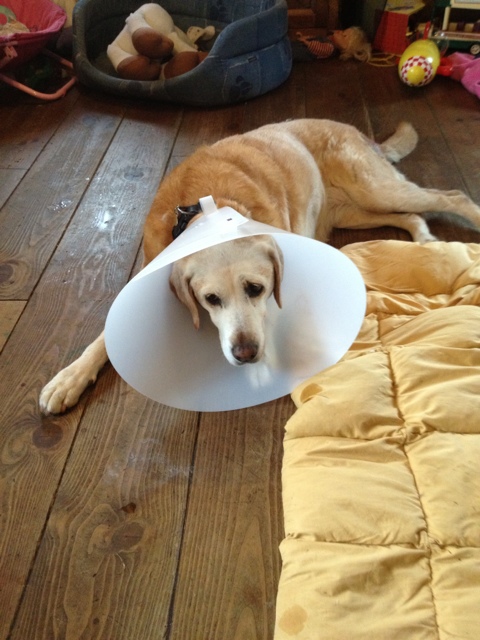
At least Soda’s back in decent shape. Happy chasing the cat, arthritis permitting. If I can do the same at her age I’ll be happy enough.

20120724-011325.jpg

Master Joe and the St Colmcille’s Gaelic Football Team

Master Joe

Master Joe

When I was at St Colmcille’s Primary School in Omagh, I got an education in gaelic football that was taken for granted, but which I know now to have been invaluable. In fact, it is the stuff of legend round Omagh, if anyone ever stopped to think about it. For that, take a bow Joe McElholm, as the pundits would say. More of Master Joe later.

Probably nowadays some of what we did would be frowned upon. Fifteen-a-side matches on a full size pitch for example. Intra school tournaments of four six or eight teams. Hawks, Eagles, Falcons, or Harps, Shamrocks, etc. God there must have been some craic in the classroom picking the teams when us boys were signed up.

The first competition I ever played in I was in P4. Being tall I was put in goal. I remember still vividly standing in the goalmouth at the Gortin Road end of the Christian Brothers Park. The goalmouth was deep in water and the hardier souls, usually boys from O’Kane Park and Strule Park would rush in splashing ferociously through the water to try to score.

I remember coming for one high ball, catching it and hoofing it out the field as far as my good left foot would let me. The teacher told me well done. It might have been the late Master Harkin or Master Foley. I disliked doing goal intensely and hoped that I would be put out the field as promised the next day. That didn’t happen. And having shipped a few scores I pulled a sickie for the third match so I didn’t have to do goals. I remember telling my mother I was afraid of getting hit with the ball and she tried to help me furnish shin pads out of corrugated cardboard for a Gaelic match for Chrissakes!

I have no memory of my father taking any interest or involvement in anything to do with myself and football. For all the fanaticism among my brothers and I, he seemed uninterested, the only time he showed much enthusiasm was when Armagh got to the All Ireland in 1977, which was not that long before he passed away. I remember that summer listening to the commentary of Armagh v Roscommon in the All Ireland semi final in the car wherever it was we were going.

These competitions would be run off two or three times a year over a series of weeks. The games were played down at St Patrick’s Park and the Brothers Park. To get to St Pat’s we would leave St Colmcille’s and head over past the Hogshead. Then we would slip down by the banks of the Strule, over a wall and along the side of the river before climbing back through a gap in the wall in to the pitch. Nowadays it just wouldn’t happen.

When you got there the teachers would appear with a duffle bag of jerseys, often encrusted with the detritus, muck and stench of the previous days hostilities. One strip was an old-style vintage Man Utd yellow away strip complete with badge and triangular collar as worn by George Best et al. Forget about wearing gear from foreign games, we were just pleased to get a strip and away we would go, Gaelic-footballed to the nines. Managed by a teacher, all of whom seemed as mad and as mad for it as we were. Some were better than others. You knew if you got Dominic McElholm he was great craic. Master Farry was a hard ass. Master Foley I think smoked a pipe and was too much of a dilettante to know much about Gaelic football. Master Harkin was a tough enough coach I recall.I’m sure the staff room rivalry and slagging would have been red hot at times, I can see the value these men would have had, looking back now through the fugue of years!

Top man was Master Joe, Joe McElholm, brother of the aforementioned Dominic. Joe was a studious looking man, glasses perched on his nose, serious looking. He has a shock of curly black hair, and what I would describe a short stocky physique. In terms of technical coaching he was on a parallel with some of the best coaches I have come across or listened to. In us boys he embedded, ingrained and imbued a foundation knowledge of Gaelic football that is still relevant today. Its skills. How to kick the ball. Where to position yourself for any given eventuality. It was indeed a football education.

He taught us how to kick dead balls off the ground – head down over the ball, standing foot planted, kicking through the ball. On the subject of the opponent. Don’t talk to him. A simple rule. On lifting the ball, catching to the chest; catching above the head, the fist pass. He burned it in with enthusiasm, strictness and an authority that we all respected and slightly feared.

In our last year at St Colmcille’s our duty was to play in the Rice Cup. It was the McRory Cup for P7 Christian Brothers Schools and although the Brothers had left St Colmcille’s, we were still a mainstay of the competition. Yes we played local primary schools in challenges, usually in P6, and for some reason seemed to lose, but we looked on them with a certain disdain because WE were in the Rice Cup.

I recall in the Spring before P7 we played in a blitz that featured the Rice Cup teams – Abbey CBS, Armagh CBS, Turf Lodge and St Aidan’s. It was held up on a windswept pitch on the Glen Road that I now know to be St Mary’s. We lost a final or semi final on penalties believe it or not, but I remember the highlight being allowed to wear the school’s Rice Cup kit, the sky blue and dark blue as worn by the Dubs with three stripes down the arms. It was magic.

When it came to the Rice Cup the routine was simple to us, but in retrospect a logistical nightmare most likely for the teachers concerned. Master Joe and a few other colleagues would take their cars to the match. We set off to play St Aidan’s in our first game on the all weather pitch at Glen Road CBS, West Belfast. I remember our opponents had several large, loud skinheads on show who ruled the roost. I was a sub that day, the only game I didn’t start, and even then I felt the injustice and made a poor pine rider, before coming on and playing, I thought, a decent enough game. Not so Joe.

He picked out a smattering of players who he felt had done well enough to qualify for post match sandwiches, crisps and juice and after giving the remainder of us a bollocking, he said we didn’t deserve anything to eat. Eventually he relented so that we could get fed. When I think back it was some adventure in 1979 to drive a squad of players from Omagh to Belfast for a match. And then to refuse to feed them! But I suspect he was toying with us in the manner of a Master psychologist and strategist. The SunTzu of St Colmcille’s!

We played matches in Newry on the Pat Jennings pitch, in Armagh on the All weather pitch at the CBS, and at the College grounds in Armagh. I remember we played in one other competition whose name escapes me (McGreevey Cup possibly I am told) and upon reaching the semi finals the game was scheduled for Armagh at the College grounds. As we waited along the side of the road before we got togged out – for there were no dressing rooms and lads just changed in the car – a couple of helicopters began to hover ominously over the pitch.

This being the late Seventies the Brits obviously wondered what several carloads were doing stopped together on the side of the road. Suddenly they swooped down and from the chopper emerged squads of heavily armed troopers who took up cover positions whilst an Officer chap in face camouflage approached Master Joe for some interrogation.

One of our lads, a tough nut (he reckoned himself anyway) started to cry as he felt the Brit was pointing a large Bren gun in his direction. Master Joe reassured the oppressors that we were the St Colmcille’s Gaelic Football team and that we were there to play a match, rather than fight for Irish freedom with a load of ten and eleven year olds.

Although we won that battle we lost the match, right enough it is one of two games for that team that I recall playing particularly well in. On each occasion my own self-assessment was confirmed by Master Joe, which was more than a man could ask for. I went home ten feet tall. The other was I think a Rice Cup semi final that we lost to a St Aidan’s team still featuring the big lads with the skin heads. Our performance since the first match had obviously improved, as never again did Master Joe threaten to deprive us of our sandwiches, crisps and juice. I thank him for that. In terms of post match nutrition, he was ahead of his time.

When I look back I marvel at those men. The legion of teachers in that school that pure loved gaelic football and organised those blitzes year in, year out. To Master Joe and the teachers that drove us the length and breadth of the country, in times when the roads were worse, the cars less good and the distances much longer than they would seem now. Mad craic looking back.

And the things we learned. Don’t talk to your man, don’t even look at him, you can shake his hand after the game is over. Kick passing. High catching. We were disappointed when we lost matches. And I’m sure we got bollocked for not playing well. Master Joe wasn’t afraid to make the hard calls and boys got dropped and subbed for not doing the business. But boys like Don McAuley, the late Pete McCloskey, Eddie McEnhill, Tommy McGovern, Tommy Sloan, Raymond Blaney, Liam McSorley, Paul Crossley, Jarlath McElholm, Neil O’Hagan, to name a few, we played some ball.

Thirty years on, I still have fond memories of Master Joe and his football team. Now that’s an example of damn good coaching. If someone remembers something I’ve taught them in half a lifetime I’ll be a very happy man. I may even let them eat the sandwiches.
A Career in Management

I have been involved coaching and managing teams since I was about eight years old. The first team I managed was Romania, followed by Bulgaria.

I took great interest in the teams’ tactics and how the players interacted with one another on the pitch. It was great to get this international experience at such a young age. I remember Santa Claus duly brought me a book about tactics when I was about ten. I never looked back.

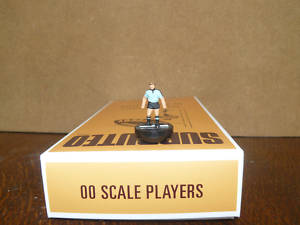
It was easy enough to implement the formations and line outs onto the Subbuteo pitch. And in comparison to my later experiences with players, you didn’t really have to worry whether they understood what you were talking about or whether they could handle the nuances of the position. They were just slotted into a particular position on the green baize and told to play there.

One of the great frustrations was the lack of replays: brilliant goals were fleeting moments never to be repeated. I could easily get my team to score from frees the ball crashing through or over the wall but when the ball hit the net that was it. Sadly the world would never see these moments.

Occasionally there would be problems with injury. Sometime an adult would enter the living room and clumsily stand on the pitch sending the silky midfield playmaker into smithereens and a long period of rehab. A few players had their careers ended this way. It was as bad as the cruciate ligament tear in those days.

Often some teams lacked a player or two – on my pitch although Argentina had just won the World Cup they weren’t just as good. The reach of the ruling Junta didn’t extend to the Living Room stadium.

My strongest team was Uruguay, with a number 8 called Santelli. In the real world he was just another fairly anonymous attacking midfielder. But I was able to get the best out of him and I played him in a sort of attacking inside left role. He was a real handful and led my Uruguay team to numerous successes. It was a great example of man management.

My sister got me Peru for Christmas – for some reason she took a shine to them and their white strip with the red sash after the Argentina World Cup. They were good but lacked that little something extra.

I hunted down other teams. I had a grá for teams from behind the Iron Curtain but the manufacturers didn’t seem to share my enthusiasm. Maybe it was the cold war. I managed to get East Germany, in the real world they were for nothing but I turned them into world beaters. Using the tiny numbers and a few extra players I’d sourced I was able to make up a few tournament-sized squads and I tried to make sure everyone got a run out in a fashion the exponents of positive coaching would endorse wholeheartedly.

I searched for Haiti and Zaire but could never find them – I always fancied a shot at managing either team, I reckoned I could get the best out of them with a bit of organisation and tactical nous.

The players got loads of games. I organised a series of international tournaments. Some were run on a worldwide basis, others within Europe or South America. I recorded the scorers and the group stages meticulously. There was no danger of anyone querying a result.
I remember one particular momentous family occasion when my brother was involved in a heated discussion with my parents, my role was to keep the players focused on their match.

A few times using spare rods that formed part of the pitch side fencing we erected Gaelic posts and were able to run off an All Ireland series of sorts. My players weren’t happy with the unfamiliar rules and it died a bit of a death.

Picking teams. Formations. Tactics. How to counteract particular players. Dealing with success. And failure. It was great preparation.
I watch on now as my own sons play Football on their wii. They pick their own teams and set their stall out. They haven’t yet learned to park the bus. They are too focused on all out attack but they’ll learn.

The other day, I picked up a sheet of paper and saw that Leo had made out a rudimentary tournament. It brought a smile to my face.
I am proud to have managed players over a number of years with varying degrees of success and failure.

Perhaps in their own time, the boys will too.

A Day Following The Children of Lír

Today, I got up at about 10:30, ate sausages and toast, and drank tea.

Then I went to mass with Cáit and Leo. Fr McGirr made reference to our match last week. After mass I skipped off home, gathered the rest and we went to the beach for a puck around.

Had there a good wee yarn with Mairtin McKinney, erstwhile colleague at the University, all round good guy. He regularly runs the beach despite a longstanding dodgy knee. Maith thú a Mhairtin.

After pucking the beach we headed to Watertop Farm. It was shut so we went to Cushendun. Angela and myself were there once years ago and we fed Johann the tethered goat Digestive biscuits. Johann became famous for being slaughtered in the industry induced panic over foot and mouth in 2001.

What threat a single goat in the middle of Cushendun posed to the meat trade baffled me then and still does. He lives on in the form of a lovely bronze statue at the front of the old pictuersque Cushendun Hotel (is it shut or open?).

It’s amazing what you can do in Cushendun for an hour and half or so. Two swans elegantly glided hither and thither across the small harbour. The children were asking me if the sea beyond there is the Sea of Moyle, recalling the Children of Lír. I could see how the location could prompt such a story. I wasn’t sure.

On the way home we stopped in Ballycastle for a while and had ice cream. There in the Park is a sweeping sculpture representing the Children of Lír Flying over the Sea of Moyle. Poetic, lyrical. Further talk from the children of the beautiful poignant story. It is a lovely setting.

After that we drove home and had slow cooked pork for dinner. A tired Gráinne called to watch the match highlights.

A wholly mundane day, doing little of substance.

And it was magic.

Prematch

To myself, Saturday 3 March. The night before. When the self doubt starts.

It eats me up I can feel the gnawing in my stomach making me want to puke. Fight or flight I suppose, having started down this road, riding this roller coaster you can’t get off. I feel strapped in. I wouldn’t rather be at home but I would.

Every games like this except these ones are worse, the secret is to trust the players. Hand it over to them. Can they do what they always do. Is that enough? The frustration lies in watching them and hoping they will do something they’ve never done. Wishing someone to be something they are not. People can only do things their way, not any other players way.

The reality is we try and condition them to do and act and perform in a particular way in a given situation. Give them those tools. If they don’t have the tools they can’t do it. So we have to trust the players. Collectively are they able to compensate for each other. Individually can they win their individual battles.

Why do I put myself through this? Why? Do I enjoy it? For the fleeting moment of joy, or the satisfaction of knowing I can do it. I suppose it gives others pleasure and enjoyment. But me? I dunno. I feel responsible for raising their hopes & dreams. Better to be here than not. Others would give their arm to be here. Coyote Camogie.

If you never try you’ll never know and in truth, you need to know. It really comes back to those nights and days in places like Lavey when we realized, yes, we can. We can. Hand it over to the players. It’s in their hands now.

Postmatch

No doubt about it Ardrahan are the best team we’ve played – they asked more questions of our players than anyone else has and full credit to them for that.

To come from behind and win against quality opposition makes this all the sweeter. I’d say the neutrals and maybe a few of our own supporters thought we were dead and buried at half time.

But we didn’t – the players themselves knew they could do better and it was a matter of reminding them at half time that the qualities that won one All Ireland were still available to them to win another.They hadn’t turned into bad players over 30 minutes and they needed to be reminded of that.

It was a matter of belief and a bit of self confidence and a few wee adjustments. The impetus came from the girls themselves, they are serious competitors. They weren’t giving this up without a fight.

The way they set about reeling in the deficit was a real joy to watch. Then when we were ahead, to defend two penalties. You couldn’t script that! Gráinne saved a couple in Kilmacud Sevens 7s a few years ago so I knew it wasn’t cut and dried that they would score.

All the team were magnificent, Gráinne deserved player of the match, Méabh, Jane Carey and Kelly Maybin too were brilliant. I would single out also Megan’s two points which were awesome scores just when they were needed.

It’s a good day for Ulster anytime you win in Croke Park. These girls deserve all the credit. Ulster Camogie is alive and well – and we’re happy to fly the flag for that no matter what anyone says. Back to back titles in Croke Park. You can’t argue with that no matter who you are.

The Hogan Steps

Last year in Croke Park I watched Méabh lift the Agnes O’Farrelly Cup from the entrance to the Hogan Stand tunnel. It was an image I had formed in my mind’s eye time and again ahead of the match. That and the imagining of her speaking the immortal lines spoken by so many All Ireland winning captains before her. ‘Ta athas an domhain an corn seo a glacadh. . .’.

Seared into my mind since then as part of the vista of celebrations was the image also of my mother in law Patsy Casey to the left. As Méabh’s granny and godmother the winning had a particular resonance for her – she was an immensely proud grandmother and loved the fact her grandsons represented Derry with distinction in football and her granddaughters Gráinne and Méabh played for the county camogie team.

The night before last year’s final she had attended the McKenna Cup Final in Armagh en route to Dublin. Indeed, one of her proudest photographs was a picture taken after Eoghan Rua won their first Derry senior Football Championship in 2010. In the picture with Patsy and the John McLaughlin Cup are Barry, Sean Leo, Ciaran, Colm, Niall and Hugh, six grandsons who were part of the winning panel.

Angela and myself and the children stayed with Patsy over Halloween weekend last year. It was like all the visits to Patsy’s house, convivial, plenty of chat and some wine to ease the conversation along. During the weekend we watched on DVD part of the Ulster Camogie Final we had just won. Patsy enjoyed watching the girls, delighting in their skill, speed and sheer beauty.

Just over a week later, she had passed away, after having endured a battle that weakened her body but never her indomitable spirit.

And so it was that we returned to Croke Park yesterday, again triumphing against what seemed after 30 minutes to be unsurmountable odds. At the finale as Méabh and Gráinne lifted the Cup, my eye glanced across to where the familiar loved figure had stood to one side last year.

Benevolent, beaming with satisfaction and pride. There was no-one where Patsy had stood, but in her absence I felt a tangible huge presence, soaring overhead and sweeping and swirling through my emotions. It made the occasion utterly poignant, but I know that even more than last time, she was with us, smiling on as she watched not one granddaughter, but two lift the Agnes O’Farrelly Cup.

Ádh Mór Patsy, agus go raibh mile mile maith agat.

Eureka.

Stan Collymore
Doesn’t see Ulrika
Anymore.
Instead
He speaks as gaeilge
And we love it,
Love it, love it
Just like when Queen
Liza midst our ladies
Uttered a cupla focal
Of stilted words. We nearly
Choked on our Carrigeen souffle.
Be advised famous Seamus said cross-
Table. Well what’ye think
Now Bellaghy boy, did you
Toast her?
Whose boys toasted
Your friends, women and countymen.
No flagon of yours raised?
And, so, Stan Collymore speaks Irish.
So do I. And it means fuck all
My cupla focal. Just like his.
Eureka.
Couldn’t bate her
With a big stick.

Boots

I bought Angela a pair of boots
For Christmas you understand
They surprised her, the boots
Very fashionable she said to me
I didn’t think they’d suit me she said.
Well I did. So,
One of the first things I noticed when
We met.
In the Hogshed bar were her
Long legs, all the way they go
Up, to her
Curly hair’d smile and that
Grin. Pint handed both less
Spotted now and more’s the pity. Then,
Fag smoked just like her
Mother.
Patsy, but no more.
So the boots. Predictable
I suppose I should have picked
Knee length boots, but I spied
My niece, in reality Angela’s niece Wearing…
Ankle boots. She looked great. She
Gets it from somewhere and
I know where.
Sometimes it takes a pair of boots to
Say you have great legs which in
Turn means. Well you know what it
Means as opposed to any other
Oul shite. Different ways of saying
The same thing. She looks great
Starting from the bottom up.
And as for the legs. Bootilicious.
And now she lies, sleeping
Across my lap. Boots
Kicked off, but they lie there Appreciated.
And it sometimes takes something
Like that to say what needs to
Be said as opposed to what’s
Lazily said. Easily said, but
Wrong.